E-Commerce has transformed business selling and growth. It assists the brands to connect with customers worldwide and grow more quickly. Nevertheless, there are actual challenges to e-commerce. The problems that many businesses have difficulty with are visibility, conversions, logistics, and security. Such problems have the effect of slowing down growth and decreasing profits.
Shopify is a solution to these issues. It has in-built solutions, integration, and scaling. This blog addresses the best eCommerce issues and demonstrates how each of the issues is solved simply and effectively by Shopify.
Shopify Solves Major E-commerce Challenges
Identifying and Reaching Out to the Right Audience
Most businesses do not get the right customers. They use money to make advertisements without having clear insights. Inappropriate targeting results in low conversions and budget wastage.
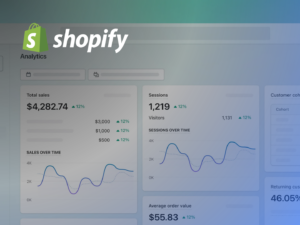
Shopify addresses this through built-in analytics and marketing connections. You are able to monitor the purchasing patterns, traffic sources and customer behaviour. Google Analytics, Facebook Pixel, and email marketing solutions work well with Shopify. These insights assist you in reaching the right audience and enhancing the performance of campaigns.
Selecting the Correct Products to Sell
The choice of products is a massive factor in eCommerce success. Companies tend to make assumptions about demand rather than basing them on data. The result of this is slow-moving inventory and low margins.
Shopify makes you make wiser product choices. It provides inventory services and sales reports. You are able to test products, follow trends and make changes in a short time. Shopify also has an application with dropshipping and print-on-demand. These software tools minimise risks and assist in rapid product testing.
Creating a User-friendly Website
A confusing website sends the customers away. Poor mobile design and slow load times slow down trust and sales.
Web creation is made easy by Shopify. It has professional themes that are compatible with any device. The drag-and-drop editor assists you in creating pages without writing any code. Shopify websites are quick and meet the current UX. The clean design enhances engagement and conversion.
Conversions and Customer Retention
The stores have large traffic but fail in turning visitors into purchasers. People lose clients once the initial order has been made.
Shopify also has conversion/retention tools. Abandoned cart recovery emails remind customers to buy the items. Promotions and discounts make us take action. The upsell and cross-sell apps enhance the order value. Shopify is also connected with loyalty programs and email services to form long-term relationships.
Delivering Strong Customer Satisfaction
Lack of support tarnishes brand trust. The customers are demanding prompt responses and open updates on the orders.
Shopify assists companies with the provision of improved service. You are able to make all orders in a single dashboard. Responding time is enhanced through integrations with live chat, chatbots, and helpdesk tools. Centralised data assists teams in fixing problems more quickly. Satisfied clients come back and refer to your brand.
Logistics Management and Business Scaling
With an increase in sales, logistics becomes complicated. Inaccuracies in inventory, delays in shipping and manual operations stifle growth.
Shopify makes logistics and scaling easy. Real-time inventory tracking. Shopify also connects with other shipping companies and fulfilment providers. Automated processes lower down human labour. Shopify scales in a very simple manner as your company expands. You are able to deal with increased demand without system failure.
Ensuring Website Security
The security issue is one of the leading concerns in e-commerce. Data breaches kill trust and reputation.
Shopify has a high level of security by default. It consists of PCI compliance and SSL. Frequent updates ensure that your shop is not threatened. Shopify takes care of hosting and security control. These attributes safeguard customer information and foster trust at the checkout counter.
How Shopify Compares with Other eCommerce Platforms
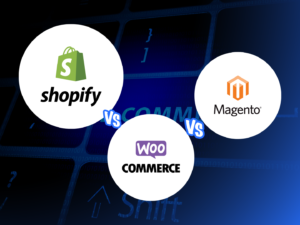
Shopify is better than WooCommerce, BigCommerce, and Magento.
Shopify has a user-friendly interface and easy-to-use tools. WooCommerce needs knowledge of WordPress and manual installation. BigCommerce is growth-friendly and has fewer integrations. Magento is powerful and requires a high level of technical skills and expenses.
Shopify is an easy-to-scale platform that does not require complex hosting modifications. It provides a massive application store containing thousands of integrations. In-house security and round-the-clock support are value-added. These features are frequently matched by other platforms with the use of a plugin, developer, or custom hosting.
Why Shopify Works for Long-Term Growth
Shopify helps businesses at all levels. Startups launch fast. Expanding brands expand without resistance. Extensive enterprises personalise profoundly using APIs and integrations.
Shopify is both user-friendly and high-performing. It cuts down the technical load and streamlines operations. Companies do not need to worry about the problems of the platform, but rather can work on sales, marketing, and customer experience.
Overcome eCommerce Challenges with the Right Partner
Shopify has impressive capabilities, yet it is a strategy and implementation that brings success. Tailor-made designs, intelligent integrations, and performance optimisation make Shopify worth the money.
Juoto assists companies in making Shopify a growth engine. Our team will create custom Shopify stores, develop complex functionality, and optimise performance. We strategise technology and business to achieve outcomes.
Want to win over the challenges of e-commerce and grow with ease? Reach Juoto and start the next level of your Shopify store.